Rayman 4 (2005 cancelled prototype)
| Rayman 4 | ||
|---|---|---|

| ||
| Published by | Ubisoft | |
| Developed by | Phoenix Studio | |
| Programmed by | Gregory Corgie | |
| Art by | Jean-Marie Godeau (artistic director) Yann Le Pon Guillaume Bonamy Emeline Bellemin (character design and backgrounds) | |
| Release date | Planned for 2006 (cancelled) | |
| Genre | 3D platformer | |
| Platforms | Sony PlayStation 2, Sony PlayStation 3, Microsoft Xbox 360, Sony PlayStation Portable, Microsoft Windows, Nintendo Wii | |
- This article is about the prototype developed in 2005 by Phoenix Studio. For other games referred to as Rayman 4, see Rayman 4 (disambiguation).
Rayman 4 is an unreleased 3D platform game developed for Ubisoft by Phoenix Studio. Had it not been cancelled, Rayman 4 would have been the first game in the main Rayman series not to be developed by the Ubisoft Montpellier studio.
The project had its beginnings in early 2005, when Ubisoft Montpellier was fully occupied with the development of Peter Jackson's King Kong. During this time, concept art was created for various environments and characters, and an unknown amount of programming, modelling, texturing and special effects creation was carried out.[1][2] The project was ultimately discontinued after several months of development, with sources stating it lasted either four[3] or approximately ten months.[4] A portfolio entry from a former developer suggests that the project may have briefly been a joint effort with Ubisoft Montréal before the team was fully shifted to work on King Kong.[5]
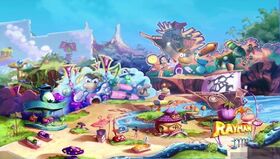
Most of what is known about Phoenix's Rayman 4 comes from early artwork and design details leaked gradually in the years since its cancellation. The artwork depicted much more surreal and colorful environments than those seen in early Rayman Raving Rabbids images and trailers; many of these Rayman 4 environments were 3D recreations of areas from the original Rayman game.
In May 2006, Ubisoft unveiled Rayman Raving Rabbids, a new 3D platformer being developed by Ubisoft Montpellier under the direction of series creator Michel Ancel. There was long a point of confusion regarding the relationship between these two games, as both were working under the title of Rayman 4. It has since been clarified that the two were entirely separate projects built on different branches of the Jade engine.[6] Phoenix Studio was reportedly tasked with developing a Rayman reboot because the Montpellier studio was fully occupied with the development of Peter Jackson's King Kong.[7] When Ancel and the Montpellier team finished King Kong in late 2005, they immediately began work on their own Rayman 4 concept, which led to the cancellation of Phoenix's prototype.
The two cancelled projects are distinctly linked, however, by the Game Boy Advance version of Rayman Raving Rabbids. That handheld title began development based heavily on Phoenix Studio's concepts—including their proposed level themes and "ghost" transformations. When the mainline console game shifted to Montpellier's Rabbid-focused direction, the Game Boy Advance developers were mandated by Ubisoft to incorporate Rabbids into their existing design. As a result, the final Game Boy Advance game exists as a hybrid of both cancelled Rayman 4 projects.
Plot
The plot of Rayman 4 was never finalized, with the narrative reportedly changing constantly during pre-production. According to leaked design details and developer interviews, the game would have featured a highly meta-referential premise where characters were self-aware of their existence inside a video game.[4][7] One early draft began in a "training camp for video game heroes", where Rayman would wait to be chosen by a player in the real world.
The narrative heavily explored the connection between the game world and the real world. A recurring plot point across different drafts involved a real-world child who had suffered a gruesome accident and lost the use of their limbs. This child would connect to the game world to control a Rayman clone, resulting in an emotional tone heavily inspired by the film Tron and the works of Pixar.
It appears that the game was to be a reboot or retelling of the series, taking heavy inspiration from the first two games. It would have involved Rayman revisiting numerous locations from the original game and Rayman 2, recreating 2D stages like Band Land in 3D to a high level of accuracy.
The main antagonist of the game varied depending on the draft. One iteration intended for Dark Rayman to be the primary threat, portrayed not as a standard character, but as a rogue glitch or corrupt piece of data bent on taking revenge on the game's inhabitants. Another draft allegedly featured the return of Mr Dark, with a plot twist revealing him to be Dark Rayman in disguise.
One piece of Rayman 4 artwork shows Rayman standing in a vast, cathedral-like area, decorated with stained-glass windows and statues which depict 'Dark Rayman'. It could be speculated that this was to be the location for an encounter or battle with him.
-
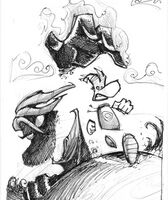 Sketch of Dark Rayman to be used in Rayman 4.

Gameplay
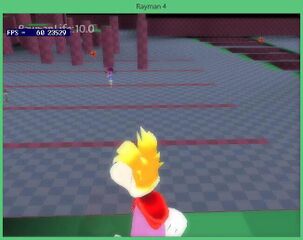
Little is known about the gameplay of Rayman 4, but the concept artwork makes it clear that it was intended to be a 3D platformer and screenshots from the development build seem to point toward gameplay being similar to that of Rayman 3. Phoenix had planned to make the game slightly easier than earlier installments to increase the mass appeal of the series, having said in their design documents that "100% of players should be able to finish it".[4]
It seems that one of the game's key features was the use of various guises, each one granting a unique power. Concept art shows Rayman in various forms: regular Rayman, mime Rayman, chewing-gum Rayman (which may have inspired the Punk costume's power in the Game Boy Advance version of Rayman Raving Rabbids), bubble Rayman, invisible Rayman, hedgehog Rayman, super helicopter Rayman, ghost Rayman, torch Rayman, Bigfoot Rayman (which bears a striking resemblance to Raymolk), and boxing Rayman. While these were long assumed to be physical transformations Rayman would undergo, alleged design details and recovered engine code later revealed that these were actually meant to be distinct "ghost" characters that would follow the player and grant abilities.[7][6] Leftover executable data confirms that at least two of these ghosts, the Boxer and Chewing-gum forms, were actively implemented before the game's cancellation. Code strings also suggest that gameplay heavily involved physics-based puzzle solving, with mechanics utilizing magnets, charged plates, and rotating rings.
-
-
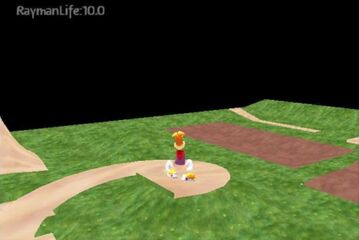 A screenshot of the development build depicting Rayman in a simple grassy environment.
 -
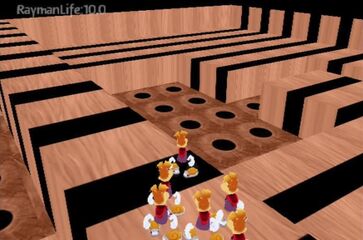 A screenshot of the development build depicting multiple Rayman models standing in a simple environment with varying wooden textures.
 -
 Concept art depicting Rayman's various transformations.
 -
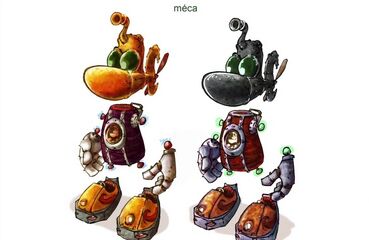 The design for a Rayman-shaped submarine that would be used to navigate underwater, possibly the same object seen in the concept art for the Organic Cave.
.jpg)
.jpg)
.jpg)


Levels
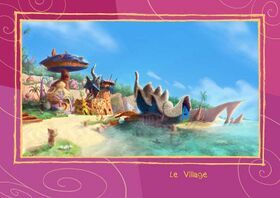
- The Village
- Band Land
- Band Land-themed forest (possibly part of it)
- Picture City
- The World of Toys
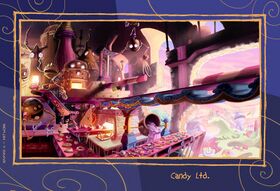
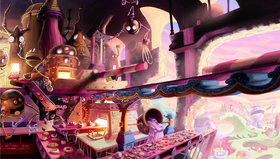
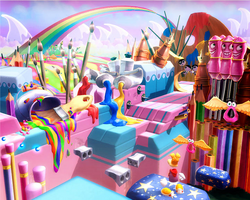
- Candy Ltd
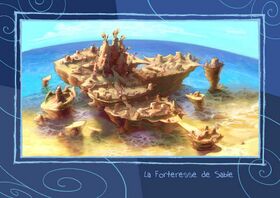
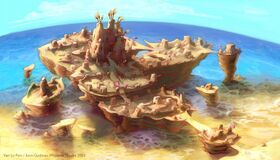
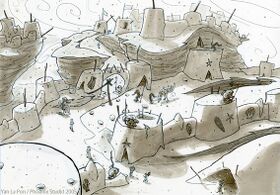
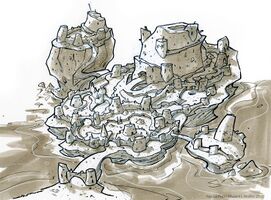
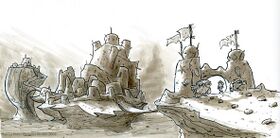
- The Fortress of Sand
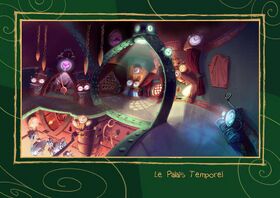
- The Temporal Palace
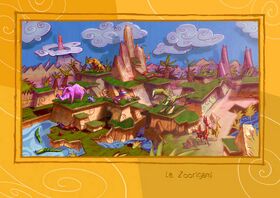
- The Zoorigami
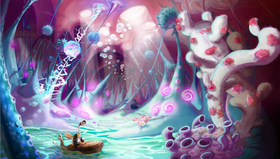
- The Organic Cave
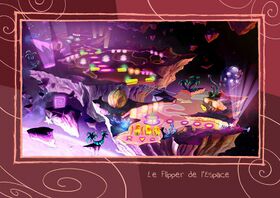
- The Space Pinball
- Unnamed lair of Dark Rayman
- Rayman Land
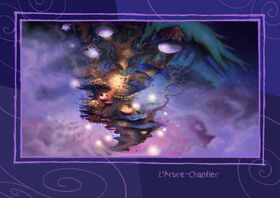
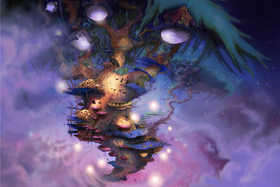
- The World-Tree
Discoveries
Guillaume Bonamy concept art
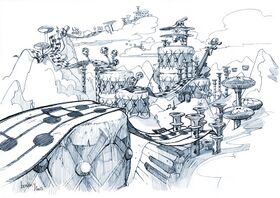
In 2009, several pieces of artwork from 2005 were published on videogame concept artist Guillaume Bonamy's portfolio. They feature three-dimensional versions of Band Land and Picture City, as well as new environments called le Palais Temporel (the Temporal Palace), le Monde Organique (the Organic World) and an unnamed world of toys. While the latter two new environments were eventually adapted for the Game Boy Advance version of Rayman Raving Rabbids, the Temporal Palace was seemingly abandoned.
-
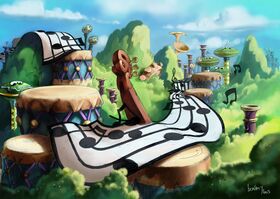 A three-dimensional version of Band Land
 -
-
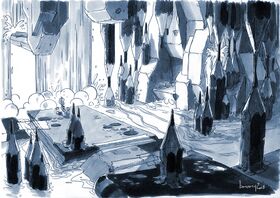 A cavern in Picture City
 -

-

-
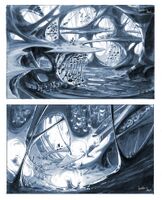 The Organic Cave
 -
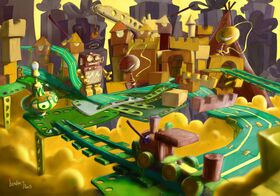


Yann Le Pon–Emeline Bellemin–Jean-Marie Godeau concept art
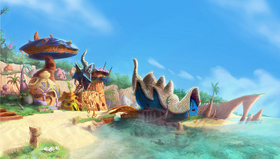
In 2012, several pieces of Rayman 4 artwork were posted on the portfolio of concept artist Emeline Bellemin. These images, which were drawn by artist Yann Le Pon and coloured by Bellemin, showed further illustrations of the three-dimensional Picture City, as well as images of the Organic Cave and several new environments. Other images have been posted on the site of Jean-Marie Godeau, the game's artistic director.
-
-
-
-
-
-
-
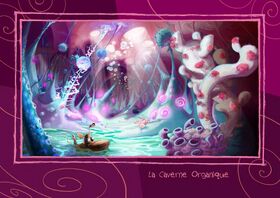 The Organic Cave
 -
-
-
-
-
 The Organic Cave
 -
-
-
-
-
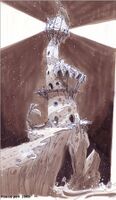 The Light tower at the Fortress of Sand
 -
-
-
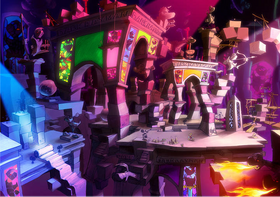 Unnamed lair of Dark Rayman
 -
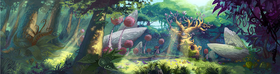 A Band Land-themed forest
 -
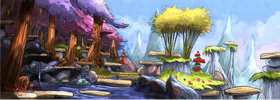 A Band Land-themed forest
 -
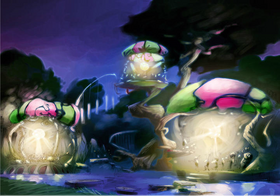 A Band Land-themed forest


Unseen64 video
On August 12, 2015, the video game preservation channel Unseen64 released a retrospective video detailing the development history of Phoenix Studio's Rayman 4. The video shared previously unknown details about the game's design and plot, alongside unseen concept art and images of an early 3D test build.[4]
The video revealed that the game was highly ambitious and meta-referential. In this iteration of the story, every character was completely self-aware that they existed within a video game, and the behavior of the characters was meant to reflect the personality of the real-world player controlling them. The video cited a specific plot point involving a seriously ill child controlling a Rayman clone, and noted that the developers intended to keep cutscenes to a strict minimum. Instead, the story was meant to unfold dynamically in real-time using subtle environmental changes to convey information.
According to the video, the game was conceived as a "full-frontal reboot" of the series, drawing heavily on the tone of the first two games. The developers planned to reimagine classic 2D levels, such as Band Land, in fully explorable 3D environments. Gameplay would have relied heavily on a diverse roster of quirky transformations and power-ups, alongside the introduction of vehicles, including a submarine and a giant, rideable Rayman-shaped mech. Phoenix Studio also explicitly aimed for mass appeal, stating in their design documents that the game should be slightly easier than previous installments so that "100% of players should be able to finish it".
The video also detailed the game's primary antagonist, which was intended to be Dark Rayman. Rather than a traditional villain, he was written as a manifestation of corrupt data—a rogue glitch that the game's designers had neglected to stamp out, which adopted the form of the hero.
Finally, Unseen64 provided a timeline for the game's cancellation. The video claimed the project was in development for around ten months before being abruptly cancelled in late 2005. The cancellation was reportedly driven by two major factors: Ubisoft's growing internal concerns regarding the upcoming launch of the Nintendo Wii (then known as the Nintendo Revolution), and series creator Michel Ancel finishing his work on Peter Jackson's King Kong, freeing him up to lead his own new Rayman project at Ubisoft Montpellier. Following the cancellation, some of Phoenix Studio's level concepts were repurposed for the Game Boy Advance version of Rayman Raving Rabbids.
Gaël Chaize 3D render
In March 2021, a render of a 3D environment with the caption "Rayman prototype" was found on the website of Gaël Chaize, who was an art director and 3D modeling artist at Phoenix Studio. It shows a Band Land-themed forest previously depicted in concept art by Yan Le Pon, Emeline Bellemin and Jean-Marie Godeau.
-
 A Band Land-themed forest

Test animations
In April 2021, a former employee of the now defunct game studio Phoenix Interactive/Phoenix Studio (not to be confused with Phoenix Interactive Entertainment), the studio that worked on the original Rayman 4 prototype, released some animations tests that they worked on for the project. The animations can be seen here.
Allegedly leaked 3D renders and concept art
On October 5, 2021, renders captured in Autodesk 3ds Max of what appears to be an early build of the game were published on Twitter, having allegedly been leaked by a former developer who wishes to remain anonymous. While their authenticity remains to be established, they show clear similarities with previously released concept art as well as the Game Boy Advance version of Rayman Raving Rabbids. They notably feature a Band Land-themed open area and the unnamed lair of Dark Rayman.
-
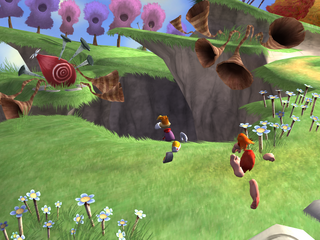 A Band Land-themed open area
 -
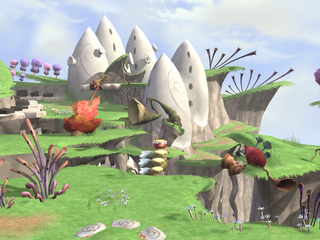 A Band Land-themed open area
 -
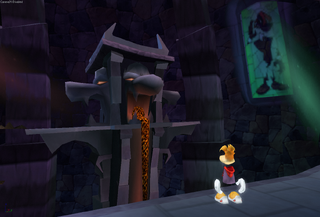 Unnamed lair of Dark Rayman
 -
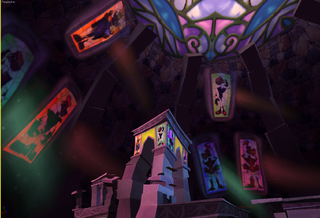 Unnamed lair of Dark Rayman


On December 2, 2021, an additional four Autodesk 3ds Max renders were leaked on Twitter by a different user who also claimed they were given to him by a former developer. They depict the previously seen Band Land-themed open area, Picture City, and again the unnamed lair of Dark Rayman. In the former, enemies resembling the Hunters in the Game Boy Advance version of Rayman Raving Rabbids can be seen in the distance. These enemies were previously intended for inclusion in that game, and an animated sprite was created for them, but they were cut during development and likely became the Hunters.
-
 A Band Land-themed open area
 -
 A Band Land-themed open area
 -

-
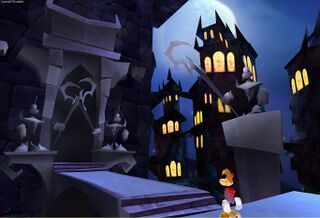 Unnamed lair of Dark Rayman


On December 10, 2021, a piece of concept art claimed to have been leaked by a former developer was posted by yet another Twitter user. It shows Rayman's bigfoot and hedgehog forms, as well as an enemy that looks very similar to both those posted on two of the previously posted Autodesk 3ds Max renders and the Hunters in the Game Boy Advance version of Rayman Raving Rabbids.
-
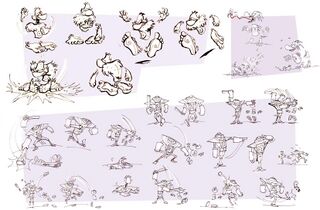 Artwork for the game

On February 2, 2022, the same Twitter user shared two other pieces of allegedly leaked concept art, showing, among other unidentified characters, another design for the Hunters, sea creatures likely from the Fortress of Sand, fauna from the Zoorigami, flora and views of the Organic Cave, and the same enemy that was previously seen in the December 2, 2021 Autodesk 3ds Max renders and December 10, 2021 concept art.
-
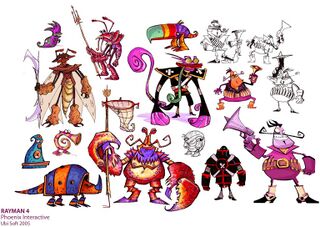 Artwork for the game
 -
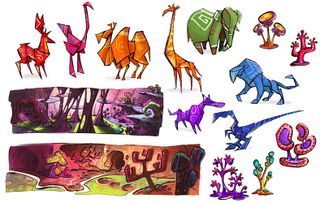 Artwork for the game


On February 14, 2022, an additional four Autodesk 3ds Max renders were leaked, also alleged to be from Rayman 4. They all appear to depict the unnamed lair of Dark Rayman. A gameplay mockup of the previously seen Band Land-themed open area was also uploaded, featuring Rayman, followed by his Bigfoot form, running through the area, activating objects resembling music instruments and fighting the previously seen enemies that closely resemble the Hunters in the Game Boy Advance version of Rayman Raving Rabbids.
-
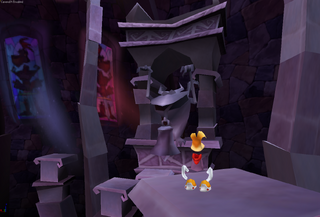 Unnamed lair of Dark Rayman
 -
 Unnamed lair of Dark Rayman
 -
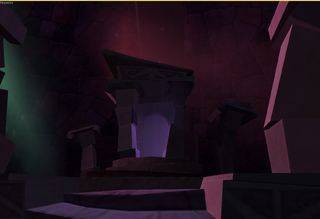 Unnamed lair of Dark Rayman
 -
 Unnamed lair of Dark Rayman


On January 7, 2023, more renders from the Band Land-themed open area, Picture City and the unnamed lair of Dark Rayman were leaked by an anonymous source, along with additional concept art of the Band Land-themed forest.
-
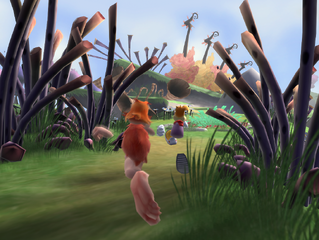 A Band Land-themed open area
 -
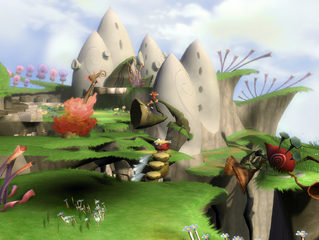 A Band Land-themed open area
 -
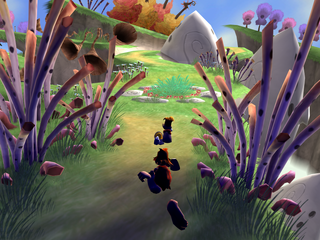 A Band Land-themed open area
 -
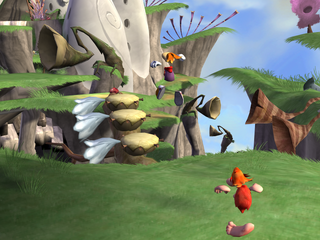 A Band Land-themed open area
 -
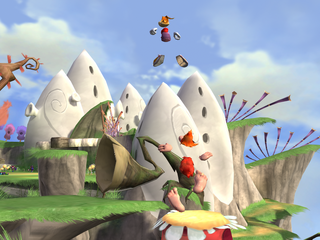 A Band Land-themed open area
 -
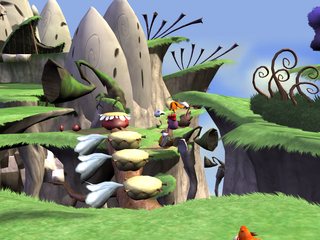 A Band Land-themed open area
 -
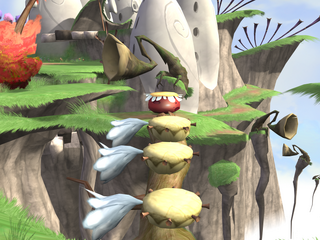 A Band Land-themed open area
 -
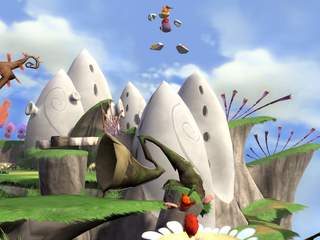 A Band Land-themed open area
 -
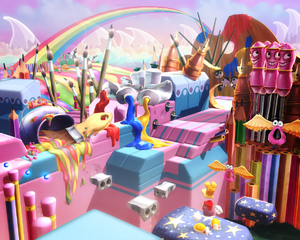
-
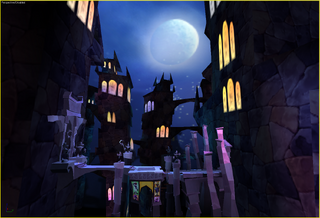 Unnamed lair of Dark Rayman
 -
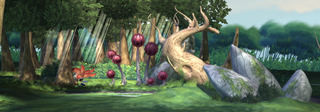 A Band Land-themed forest


Alleged development details
On June 22, 2024, a document titled "The Rayman 4 Story" was published online, compiling alleged behind-the-scenes information gathered from purported anonymous interviews with former developers.[7] Although these claims remain unverified, the text states that Phoenix Studio was offered the chance to develop the title while assisting Ubisoft with the PlayStation Portable port of Peter Jackson's King Kong, as Ubisoft Montpellier was fully occupied with that game's development.
Internally referred to as Rayman Ghosts, the project's gameplay reportedly differed significantly from previous entries. The document alleges that the various forms of Rayman seen in concept art (such as the Bigfoot or Chewing-gum forms) were not direct transformations, but rather distinct "ghosts" that would follow the main character. These ghosts would assist in specific segments by copying the player's actions with a slight delay, similar to Tails in Sonic the Hedgehog 2. This mechanic reportedly shifted the gameplay heavily towards puzzle-solving rather than traditional action-platforming.
The narrative was said to be in constant flux, but one major draft reportedly involved a child in the real world who lost the use of their limbs in a gruesome accident. This child would connect to Rayman's universe in a manner similar to Tron, aiming for a Pixar-inspired emotional tone. Additionally, Mr Dark was allegedly intended to return as the game's main antagonist, with a plot twist revealing that he was actually Dark Rayman in disguise.
The developers reportedly used Ubisoft's internal Jade engine to build the game. A major playable prototype was presented to Ubisoft, featuring a fully 3D Picture City and functioning Bigfoot and Chewing-gum clones. Despite this progress, the game was ultimately cancelled. The alleged reasons for the cancellation include Phoenix Studio's lack of experience with AAA development, the puzzle-heavy gameplay being considered less engaging than that of Rayman 3, and Ubisoft's protective stance over their proprietary engine. As the project was scaled down before its ultimate cancellation, the PlayStation Portable version reportedly became an isometric 3D puzzle game.
The document also elaborates on the game's connection to the Game Boy Advance version of Rayman Raving Rabbids. It is claimed that the handheld game was initially developed based heavily on Phoenix Studio's "mutation" and ghost concepts. Midway through development, Ubisoft reportedly mandated the third-party developers to include Rabbids to match the new direction of the Montpellier studio's project, leading to the final game being a repurposed mix of both concepts. Furthermore, the Organic Cave was noted as a repurposed level concept that originated from the Rayman Ghosts project.
-
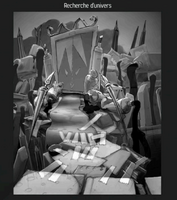 Concept art of a gate in Picture City.
 -
 The design of Dark Rayman to be used in Rayman 4.


Horsez leftovers
On March 4, 2026, it was revealed that verifiable evidence confirming several of the 2024 document's claims had already been found by reverse-engineering Horsez (known in France as Alexandra Ledermann 6).[6] Developed by Phoenix Studio for the PlayStation 2 immediately following the cancellation of Rayman 4, Horsez was built upon the exact same Prince of Persia: Warrior Within branch of the Jade engine.
Because of this, the final executable of Horsez contains a significant amount of leftover debug strings and data from the Rayman 4 prototype. This data explicitly references "RAYMAN4", a "GhostManager", and parameters for the Chewing-gum and Boxer ghosts (e.g., PrmChewingGum, PrmBoxeur, FistChewingGum). Furthermore, the strings detail a highly physics-based, puzzle-oriented gameplay loop, containing code references to magnetic fields, electro-static charges, drag coefficients, levitation plates, and interactive rings (e.g., Interact_Plate_Levitation, Interact_Magnet_MaxSpeed, BonusBoss_FirstRingRadius).
The game's files also contain sound banks and menu data referencing "Rayman4", though the actual audio assets were removed. Finally, the Horsez game data features an unused map internally named "BootCamp", which was discovered to be the exact same grassy test environment featuring Rayman 3 assets that had been seen in earlier leaked screenshots.
Notably, when Phoenix Studio was later tasked with creating the PlayStation Portable version of Peter Jackson's King Kong, they switched to the Ubisoft Montpellier branch of the Jade engine. Because Rayman Raving Rabbids was also developed on this branch, subsequent games in the Horsez series contain engine leftovers from the Montpellier Rayman 4 prototype rather than the Phoenix prototype.
See also
External links
- Jean-Marie Godeau's website
- Guillaume Bonamy Portfolio
- Emeline Bellemin at blogspot.com
- Yan Le Pon at blogspot.com
References
- ↑ LinkedIn, Gregory Corgie - France, http://fr.linkedin.com/pub/gregory-corgie/6/3a1/b34
- ↑ LinkedIn, Yan Le Pon - France, http://fr.linkedin.com/pub/yan-le-pon/42/a5/362
- ↑ Blogspot.com, Yan Le Pon - France, http://yan-board.blogspot.com/2008/10/oldies-but-goodies-part-10.html
- ↑ 4.0 4.1 4.2 4.3 YouTube, Rayman 4 - Unseen64, https://www.youtube.com/watch?v=9CvVT8cWWUY
- ↑ harryluck.com, King Kong, https://www.harryluck.com/kingkong
- ↑ 6.0 6.1 6.2 Rayman Pirate-Community discussion forums, Re: Should FancyFather's Rayman 4 document be added?, https://raymanpc.com/forum/viewtopic.php?p=1552572#p1552572
- ↑ 7.0 7.1 7.2 7.3 Sacred Surrealist, The Rayman 4 Story, https://docs.google.com/document/d/1M3KXy4tP8U_TgtB7Zy4l1hI34eTfS55CPDGpJaUode0/edit?tab=t.0
|
|
Cancelled Rayman games |
